
低温液体泵撬Cryogenic pump skid
把低温液体加压到充装或气化所需压力,用于充装站、气化站与工业气体工厂。Pressurises cryogenic liquid to filling or vaporisation pressure for filling plants and gas works.
产品概述Product overview
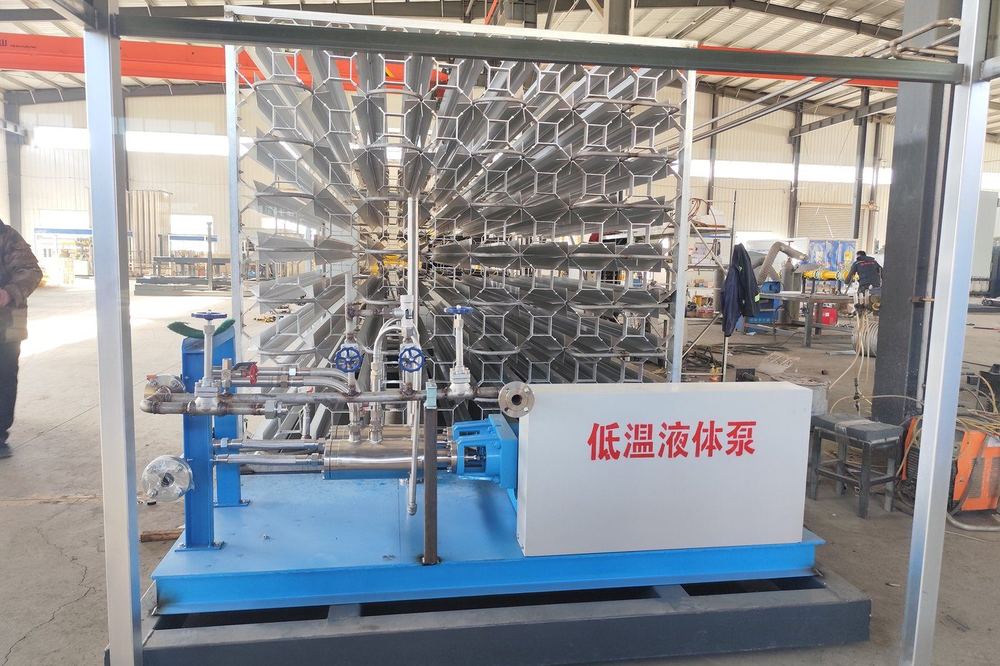
低温泵撬的核心矛盾是“冷”和“汽蚀”。液氧 −183℃、液氮 −196℃、LNG −162℃,泵前任何一段管路吸热都会产生气泡,一旦汽蚀,泵就丢压甚至抱死。所以撬上必须做三件事:泵前管路保冷、设预冷/排气回路、把泵池与储罐的静压头算准。DWB150/1500-165 型泵撬进口 0.2–0.8 MPa、出口 15 MPa、配 67 kW 电机,双列配置一开一备。Cold and cavitation dominate: insulation, a cool-down/vent loop and correct static head. DWB150/1500-165 runs 0.2–0.8 MPa in, 15 MPa out, 67 kW, dual train.
充装站场合,泵后接高压气化器与充装排;气化站场合,泵用于把液体送进中压气化器。两种流程的泵型、密封与控制逻辑不同,不能互换。Filling plants need a high-pressure vaporiser and manifold after the pump; stations feed a medium-pressure vaporiser instead.
工作原理:低温泵为什么怕气蚀Working principle: why cryogenic pumps fear cavitation
低温液体泵(离心或往复)把储罐里的 LNG、液氮、液氧等加压后送出。它的特殊之处在于介质接近饱和温度:任何一点压力下降都会让液体闪蒸成气泡,气泡进泵后在叶轮处崩溃,造成气蚀——振动、噪声、流量下降,长期运行会打坏叶轮和密封。Cryogenic pumps — centrifugal or reciprocating — pressurise LNG, LN2 or LO2 out of a tank. Their peculiarity is that the liquid sits close to saturation: any local pressure drop flashes it into vapour, the bubbles collapse at the impeller, and cavitation follows — vibration, noise, lost flow, and eventually damaged impeller and seals.
所以泵的选型核心不是扬程,而是 NPSH:净正吸入压头必须留有余量。工程上的办法是提高储罐液位、降低泵进口高度、加大吸入管径、减少弯头、必要时设诱导轮或预冷回路。泵坑布置与吸入管保温也直接影响 NPSH。The sizing criterion is therefore NPSH, not head: net positive suction head must carry margin. Practical measures are a higher tank level, a lower pump inlet, a larger suction line, fewer bends, and if needed an inducer or a cool-down loop. Pit layout and suction insulation both affect NPSH.
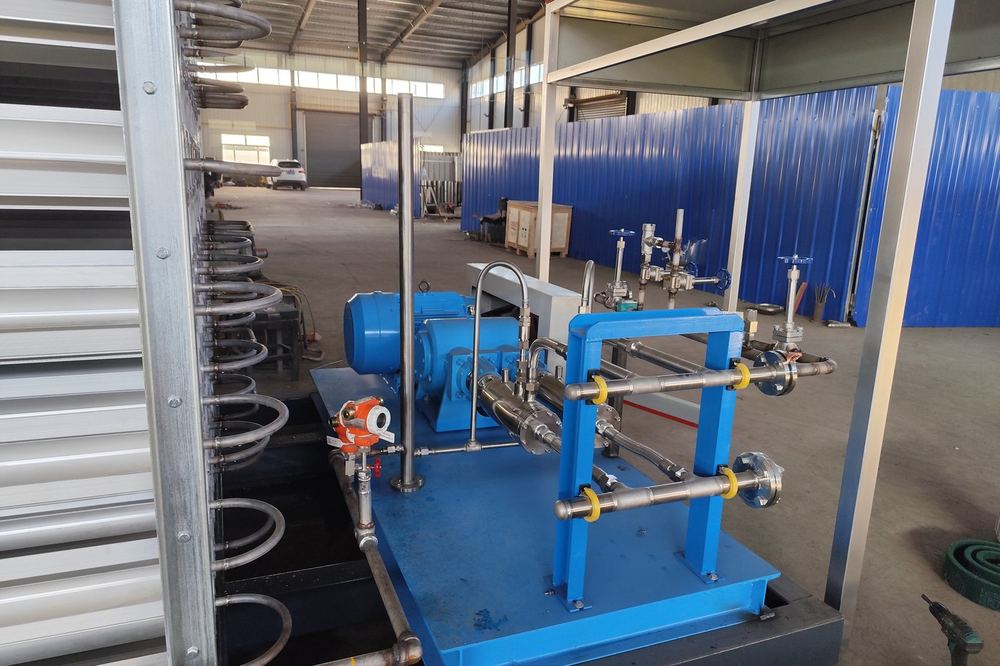
泵撬通常集成泵、变频或软启动、密封气/吹扫系统、进出口阀门、仪表与保冷。往复泵还要考虑脉动与缓冲罐。出厂前的冷试与联锁测试不能省——低温泵一旦在低温下干转,损坏是不可逆的。A pump skid packs the pump, VFD or soft starter, seal gas or purge, valves, instruments and insulation. Reciprocating units add pulsation damping and a buffer. Cold testing and interlock verification before shipment are not optional — a cryogenic pump run dry is damaged irreversibly.
结构组成What is on the skid
核心优势Why this design
- 双列一开一备:检修不停产。Duty/standby, no production stop.
- 防汽蚀设计:预冷回路与静压头计算随机出图。Cavitation control designed with the skid.
- 高压段成熟:15–16.5 MPa 出口用于充装与钢瓶检漏。15–16.5 MPa outlet proven for filling.
- 联锁完整:超压、超温、过流三重保护。Triple protection.
产品实拍Product photos
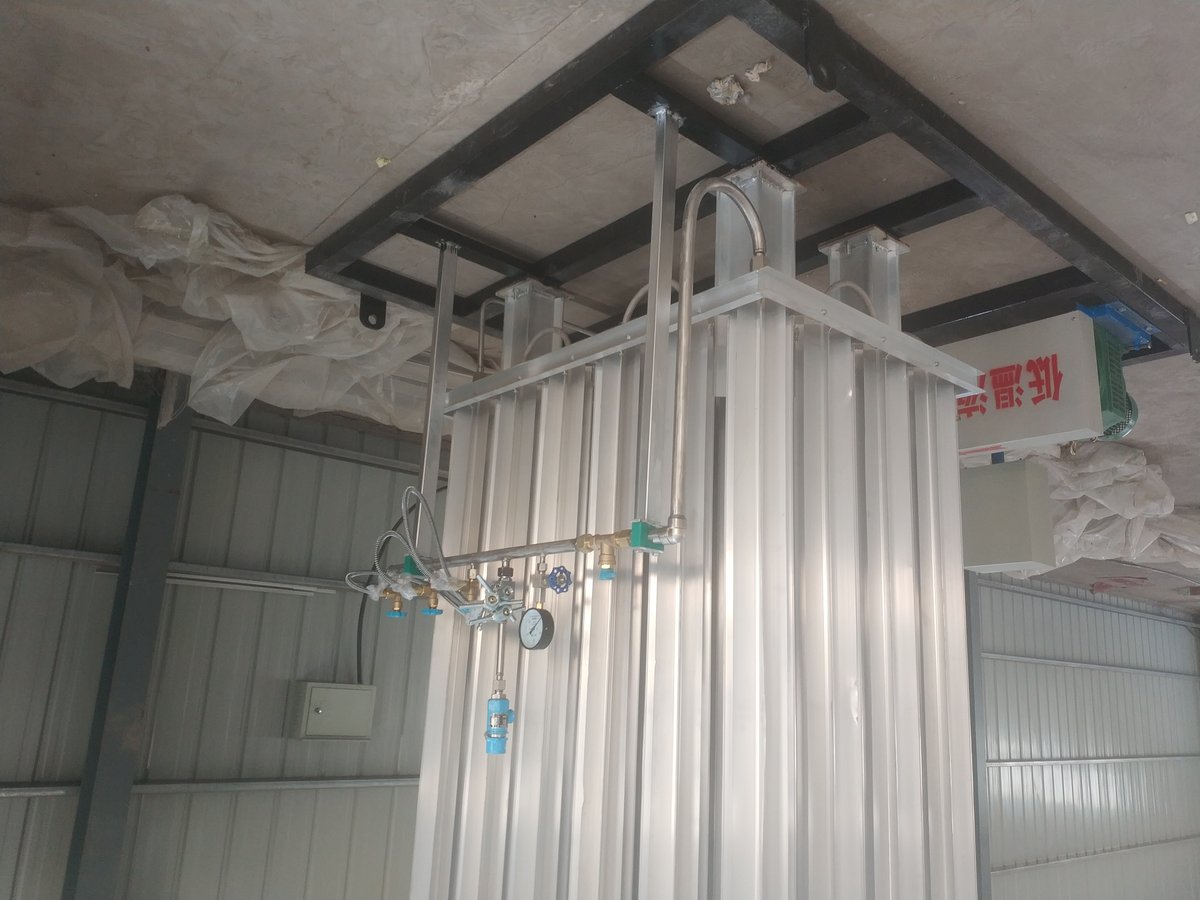
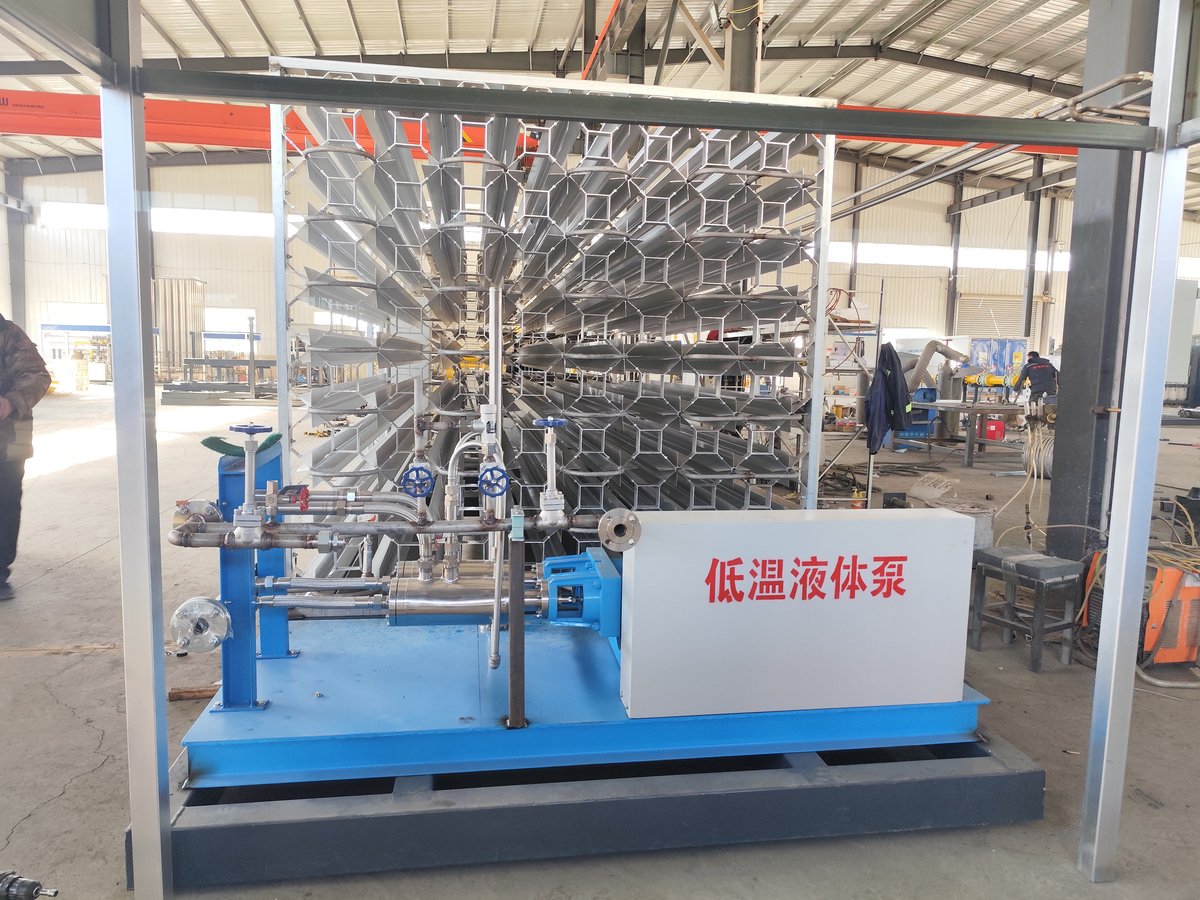
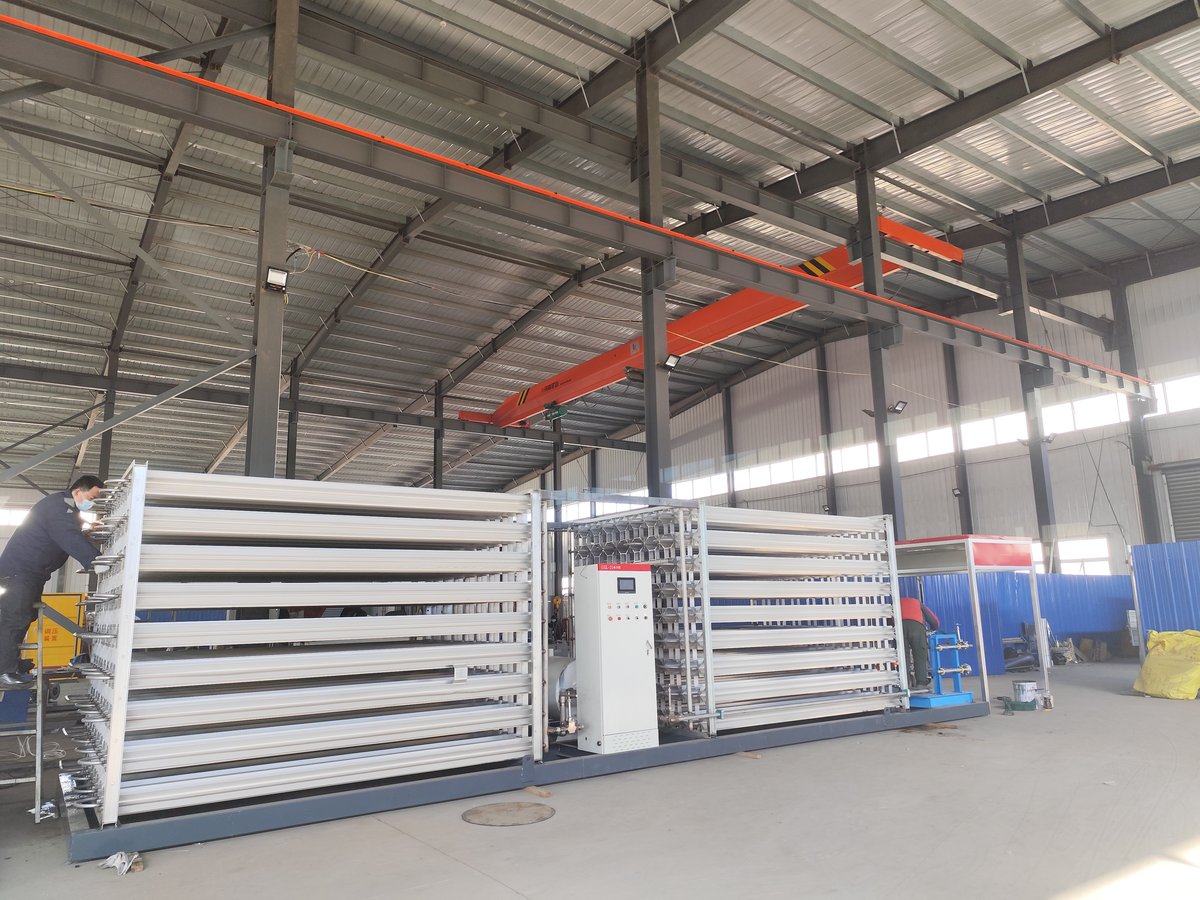
低温液体泵撬 · 泵与管路Cryogenic pump skid — pump and piping 点击图片放大查看。 Click to enlarge.
技术参数Technical data
| 型号Model | DWB150/1500-165DWB150/1500-165 |
|---|---|
| 气化当量流量Equivalent flow | 1000 Nm³/h1000 Nm³/h |
| 进口压力Inlet | 0.2–0.8 MPa0.2–0.8 MPa |
| 出口压力Outlet | 15 MPa15 MPa |
| 设计压力Design | 16.5 MPa16.5 MPa |
| 电机功率Motor | 67 kW67 kW |
| 配置Configuration | 双列,一开一备Dual, duty/standby |
| 介质Medium | LO₂ / LN₂ / LAr / LNGLO₂ / LN₂ / LAr / LNG |
表中为该系列典型配置。项目流量、介质与进出口压力不同时按工况单独设计,参数以合同技术文件为准。Typical configuration; units are engineered per duty and the contract data sheet governs.
选型与计算要点Selection points
适用工况Typical duties
适合什么工况,什么情况不适用Where it fits, and where it does not
这套设备适合Best for
- 可把低温液体增压输送,适应远距离与高扬程Pressurises cryogenic liquid for distance and head
- 变频调节,流量可按需变化VFD control for variable flow
- 整撬含预冷与回气管路,启动受控Pre-cool and vapour return built into the skid
- 出口压力、温度、振动可监测Discharge pressure, temperature and vibration monitored
需要提前确认的边界Check before ordering
- 对净正吸入压头敏感,入口温度与管路阻力需核算Sensitive to NPSH; suction temperature and line losses must be checked
- 启动前需预冷,不能干转Must be pre-cooled; never run dry
- 低温密封与保冷要求高,维护需专业培训Cryogenic seals and insulation demand trained maintenance
标准配置Standard configuration
以上为常规配置,实际随机组按工况与用户管网条件确定,可按需增减。Standard scope shown; final scope is set by duty and network conditions, and can be adjusted.
主要零部件Main components
零部件的品牌与型号按项目技术要求与用户指定品牌确定,页内不限定具体厂家。Brand and model are fixed by project specification and the user's approved vendor list.
常见问题FAQ
泵启动后流量上不来是什么原因?Why is flow low after start?
最常见是气蚀或吸入管有气袋。检查储罐液位、预冷是否完成、吸入管是否保温到位,再看泵进口过滤器是否堵塞。Usually cavitation or a gas pocket in the suction. Check tank level, whether cool-down finished, suction insulation, then the inlet strainer.
泵可以频繁启停吗?Can the pump start and stop frequently?
不建议。低温泵每次启动都要经历降温与建立液膜的过程,频繁启停加速密封与轴承磨损。用变频或回流调节更合适。No. Each start means cool-down and film establishment, and frequent cycling wears seals and bearings. Use a VFD or a recirculation bypass instead.
为什么泵体表面结霜?Why does the pump body frost?
保冷层或冷箱有缺陷,外界热量进入。结霜本身不是问题,问题是它意味着持续漏热,会降低效率并加剧气蚀。The insulation or cold box has a defect and ambient heat is getting in. Frost itself is not the issue — the continuous heat leak behind it is.
密封多久需要更换?How often are seals replaced?
取决于运行小时与启停次数,按厂家推荐周期并结合振动、温度监测判断。等到明显泄漏再换,往往已经损伤轴。By running hours and start count, per the maker's interval and backed by vibration and temperature trends. Waiting for visible leakage usually means the shaft is already damaged.
停泵后要注意什么?What after stopping?
按程序排液或保持冷态,维持吹扫,防止湿空气进入结冰;长期停机要按封存程序处理。Drain or keep cold per procedure, maintain purge so moist air cannot enter and freeze, and follow the preservation procedure for a long stop.
同类设备Related equipment
把你的工况发过来,我们出选型表Send your duty, we return a selection sheet
需要提供:介质、最大/最小流量、进口压力、出口压力、现场热源(电/热水/蒸汽)、安装场地条件。We need medium, min/max flow, inlet and outlet pressure, available heat source and site conditions.