
LNG 气化撬LNG vaporizing skid
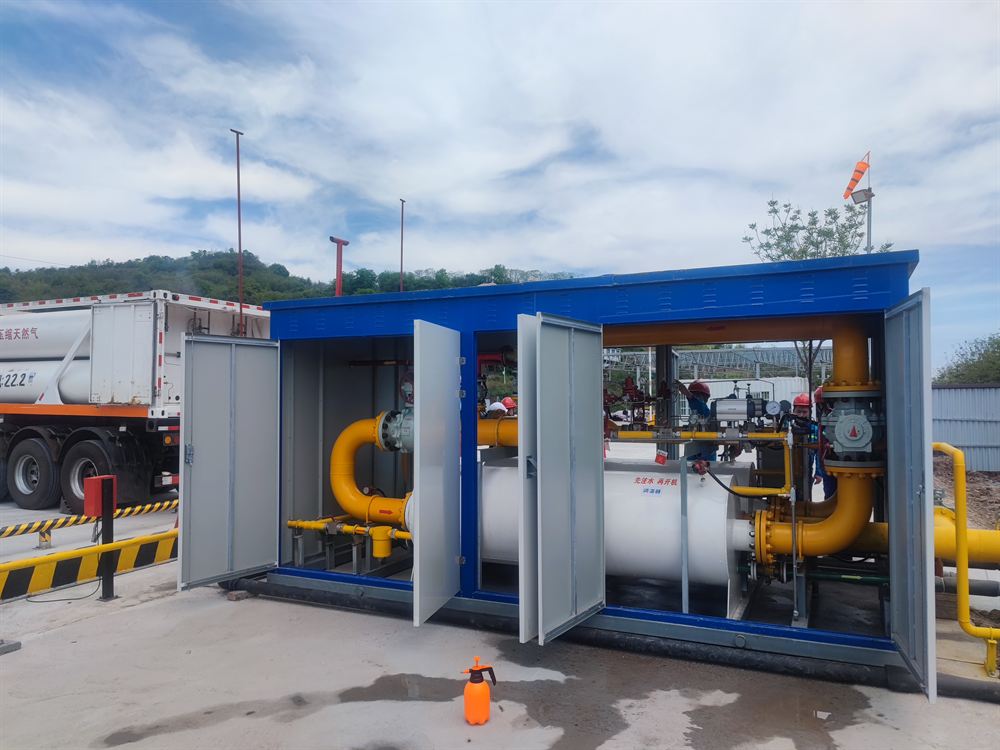
500 Nm³/h 级 LNG 气化撬,空温式气化器打底、水浴式补热,调压计量与安全放散随机集成。500 Nm³/h class skid: ambient vaporizer with water-bath trim, regulation and metering integrated.
产品概述Product overview
LNG 是 −162℃ 的深冷液体,气化撬要做的第一件事就是把它加热到常温。空温式气化器靠空气做热源,不耗电、免维护,但气化量随环境温度波动大——夏季可能到额定值的 120%,冬季 −20℃ 时只剩 60% 左右。所以北方项目常把空温式与一小台水浴式(电加热或热水)串起来,冬季由水浴式补足热量,这就是“1 级换热、2 级减压”配置的由来。Ambient vaporizers lose capacity in winter (−20 °C gives about 60% of rating), so a water-bath trim heater is added in series for northern sites.
撬上流程:槽车来液经卸车增压进入气化器,出气经两级调压降到 10–15 kPa 或用户指定压力,再经计量、加臭(民用需要时)送出。整套设备在厂内完成管路焊接、探伤、强度与气密试验、涂装与仪表联调,现场只需基础找平与进出口对接。Liquid is boosted, vaporised, regulated in two stages to 10–15 kPa, then metered and odourised where required.
工作原理:从 −162 ℃ 到常温管网的三步Working principle: from −162 °C to the network in three steps
LNG 是低温液体,常压沸点约 −162 ℃。要把它送进管网,必须依次完成三件事:升压、气化、调压。撬体上的顺序因此固定为:储罐/槽车 → 低温泵或自增压 → 气化器 → 调压(必要时两级)→ 计量 → 出口。顺序颠倒会带来两个问题:先调压后气化,液体在低压下更难稳定气化;先气化后升压,则要把气相再压缩,能耗高得多。LNG boils near −162 °C at atmospheric pressure. Three steps must follow in order: pressurise, vaporise, regulate. The skid therefore runs tank or trailer → cryogenic pump or self-pressurisation → vaporiser → regulator (two stages if needed) → metering → outlet. Reversing the order either makes vaporisation unstable at low pressure or forces the gas to be compressed again.
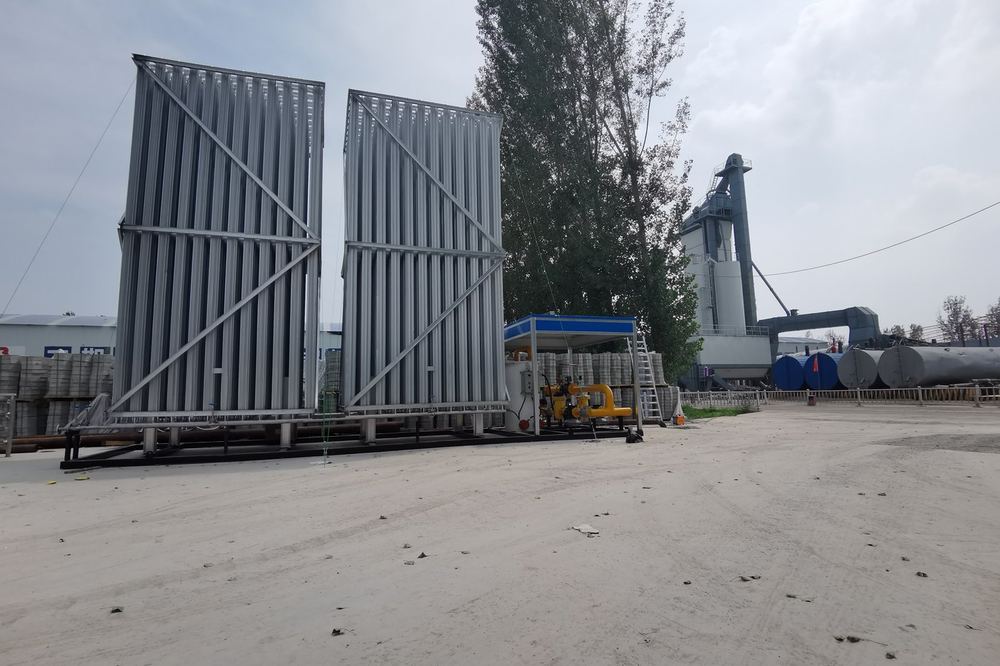
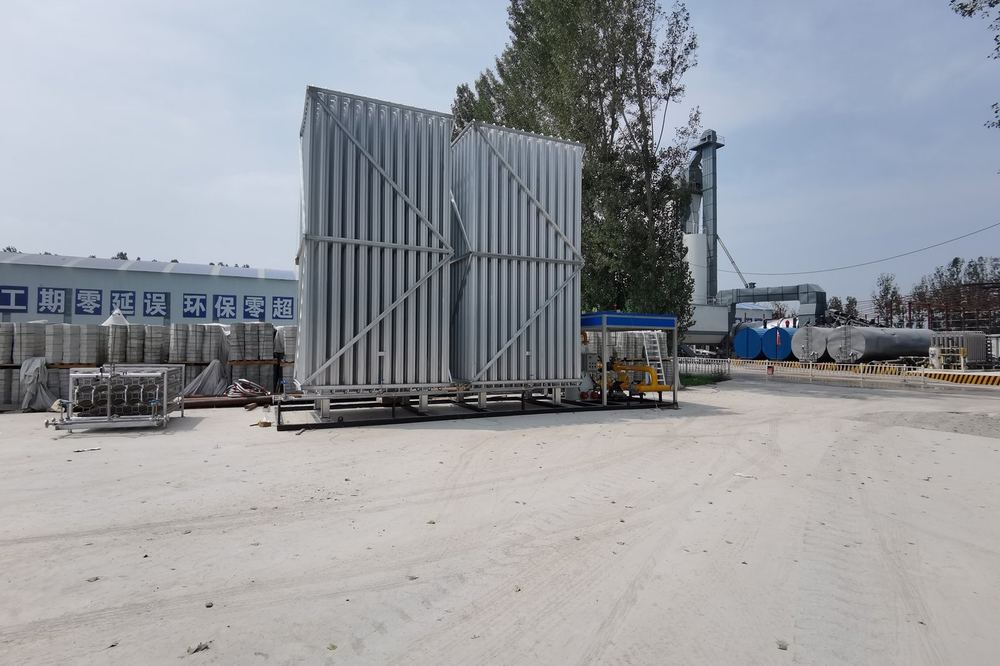
空温式气化器靠环境空气换热,翅片管把空气里的热量“借”给低温液体。它的换热能力随环境温度变化:夏天裕量充足,冬天(尤其是北方夜间)换热面积不够时出口温度会明显偏低。工程上的做法不是把气化器无限放大,而是配一台水浴式(或电加热)做“冬季补热”或并联切换,把最冷时段的负荷交给它。Ambient vaporisers borrow heat from the air through finned tubes, so their duty tracks ambient temperature. In summer there is margin; on a cold northern night the outlet temperature sags. The engineering answer is not an oversized ambient unit but a water-bath or electric trim heater kept for the coldest period, or a parallel circuit that takes over then.
调压段的逻辑与 CNG 撬一致,但这里面对的是已经气化的低温气体,要特别注意阀后管道的低温脆断与保冷。出口温度通常要控制在高于管网材质与密封允许的下限,同时避免过度加热造成能耗浪费。The regulating section follows the same logic as a CNG skid, but the gas leaving the vaporiser is still cold: low-temperature embrittlement and insulation of downstream pipework matter. The outlet temperature is held above the material and seal limit without over-heating.
结构组成What is on the skid
核心优势Why this design
- 空温为主、水浴补热:常年运行费用低,冬季气化量守得住。Ambient base with trim heat: low running cost, winter capacity kept.
- 撬装出厂:土建量小,现场接入周期以天计。Shop-built: days to connect.
- 出口压力稳定:两级减压,用气波动时管网压力不飘。Stable outlet across demand swings.
- 可扩展:预留储罐、卸车增压器、BOG 回收接口。Interfaces for tank, booster and BOG recovery.
产品实拍Product photos
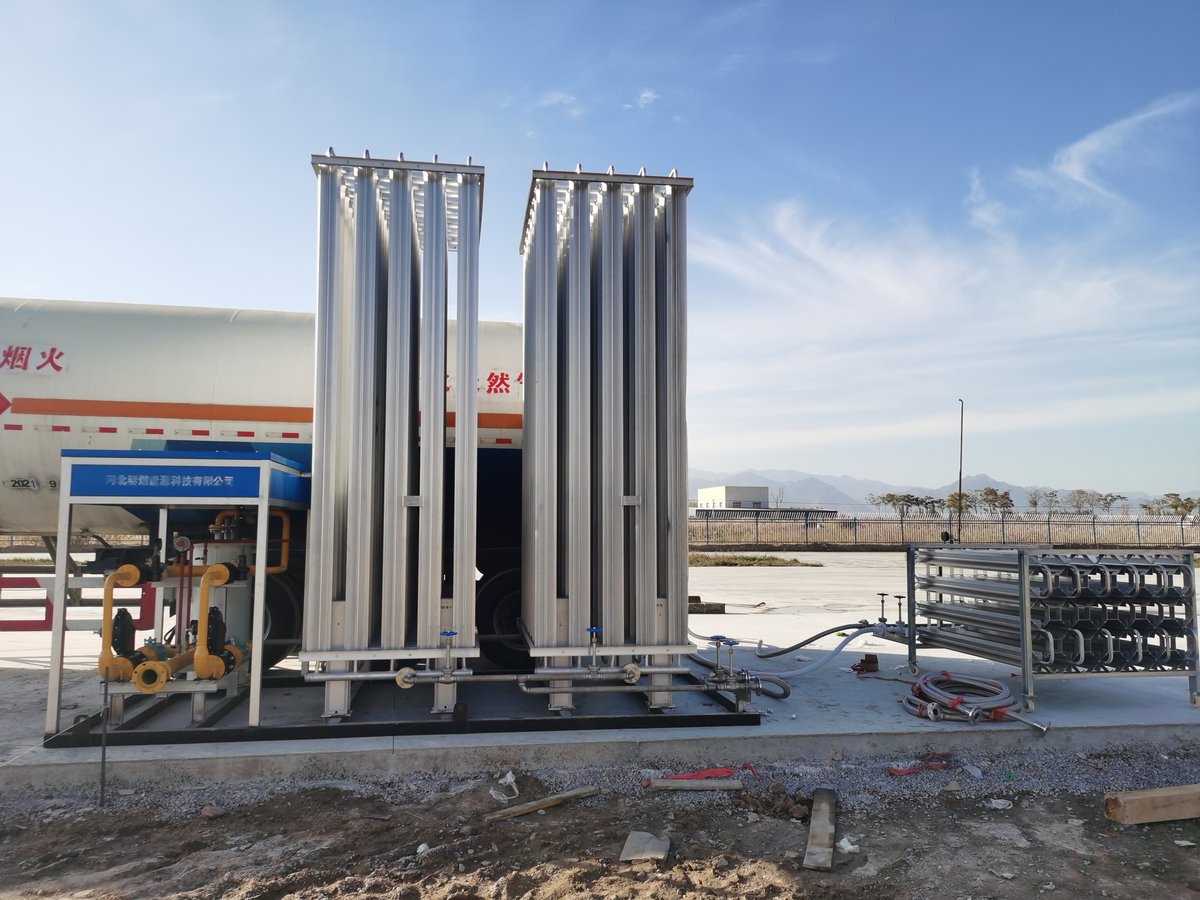
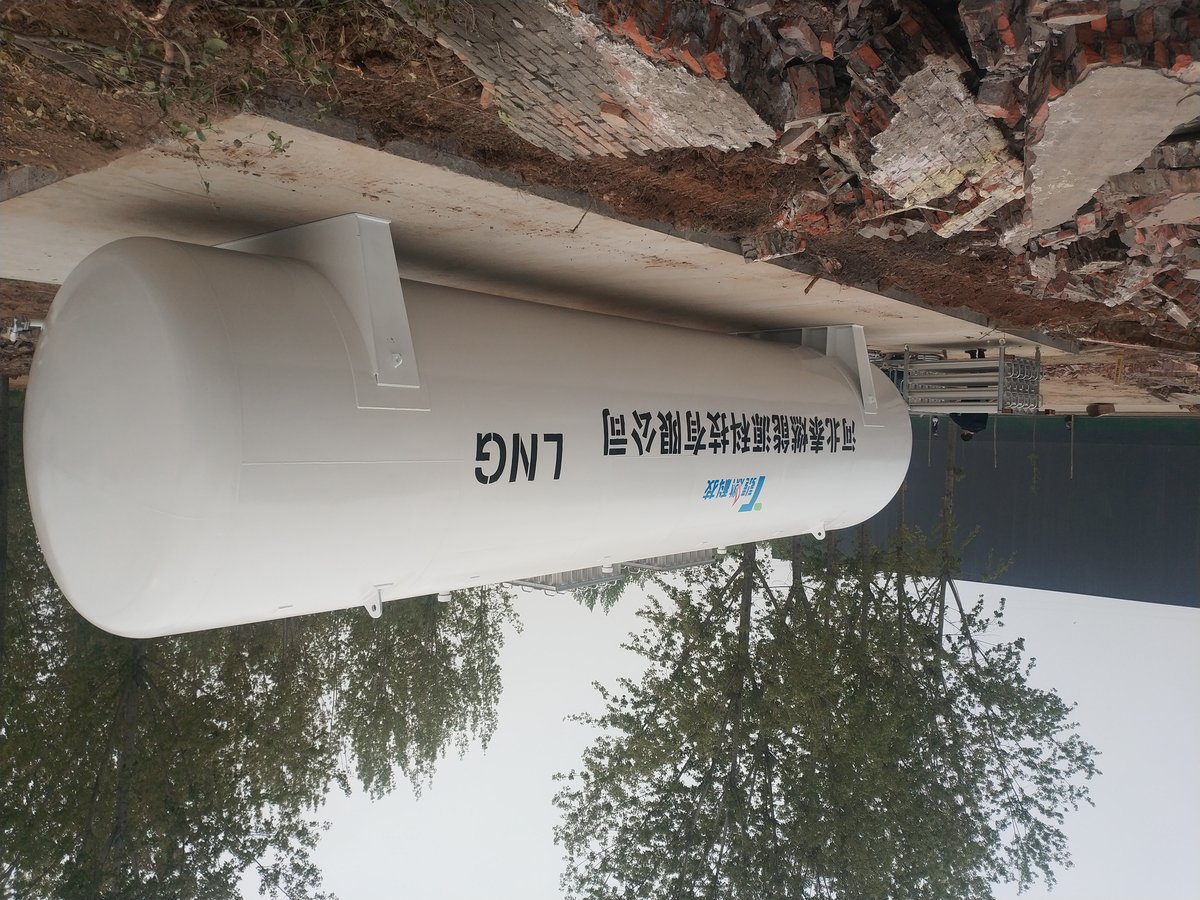
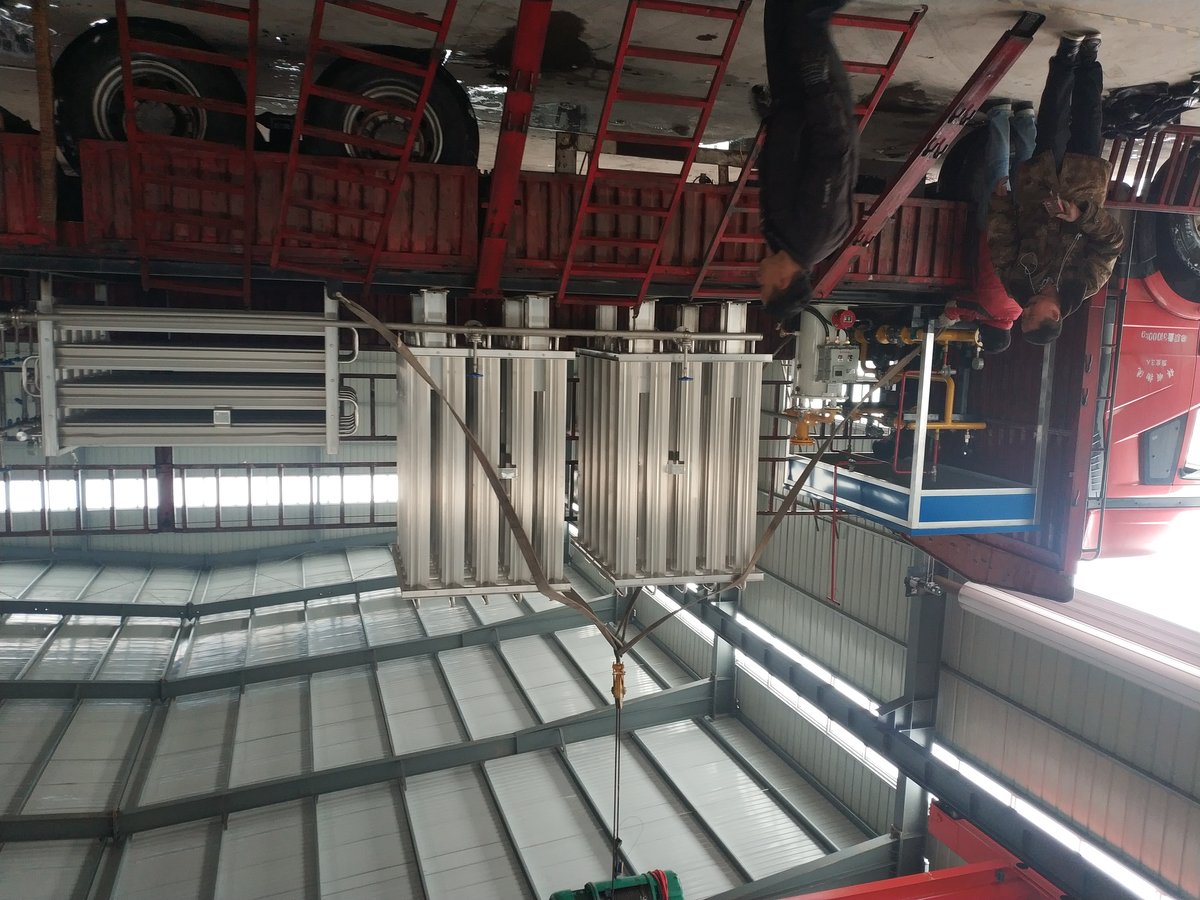
LNG 气化撬 · 现场与整撬LNG vaporising skid — site and skid set 点击图片放大查看。 Click to enlarge.
技术参数Technical data
| 型号Model | HBTL-LNG/500 Nm³/hHBTL-LNG/500 |
|---|---|
| 介质Medium | 液化天然气(LNG)LNG |
| 额定流量Flow | 500 Nm³/h500 Nm³/h |
| 设计压力 / 进口Design / inlet | 1.6 MPa / 0.8 MPa1.6 / 0.8 MPa |
| 出口压力Outlet | 10–15 kPa10–15 kPa |
| 换热 / 减压Exchange / stages | 1 级换热 · 2 级减压1 exchange · 2 stages |
| 配套功率Power | 9 kW9 kW |
| 运行环境Ambient | −20 ℃ ~ +50 ℃−20 to +50 °C |
表中为该系列典型配置。项目流量、介质与进出口压力不同时按工况单独设计,参数以合同技术文件为准。Typical configuration; units are engineered per duty and the contract data sheet governs.
选型与计算要点:气化能力按最冷天算Selection: rate the vaporiser for the coldest day
适用工况Typical duties
与传统方案的对比Against the conventional approach
| 比较维度Item | 纯空温式Ambient only | 泰燃空温+水浴Ambient + water bath |
|---|---|---|
| 冬季气化量Winter capacity | 约额定的 60%≈60% of rating | 补热后接近额定Near rating |
| 运行能耗Energy | 零耗电Zero | 仅冬季补热耗电Trim heat only |
| 占地Footprint | 翅片区占地面大Large fin area | 水浴式紧凑,整体占地小Compact trim unit |
适合什么工况,什么情况不适用Where it fits, and where it does not
这套设备适合Best for
- 无电或少电场合也能运行,适合偏远站场Runs with little or no power; suits remote sites
- 启停快,按需气化,待机不耗能Fast start; no energy use on standby
- LNG 储气密度高,同样气量占地上限小High storage density; small footprint per volume
- 整撬出厂,现场接管即用Delivered as a skid, ready after connection
需要提前确认的边界Check before ordering
- 出力随环境温度下降,北方冬季需补热或增设备用路Output falls with ambient temperature; winter needs trim heat or a standby leg
- 长时间高负荷翅片结霜,需融霜或轮换运行Fins frost under sustained load; defrost or rotate
- 贸易结算级计量需另配计量撬Custody metering needs a separate metering skid
标准配置Standard configuration
以上为常规配置,实际随机组按工况与用户管网条件确定,可按需增减。Standard scope shown; final scope is set by duty and network conditions, and can be adjusted.
主要零部件Main components
零部件的品牌与型号按项目技术要求与用户指定品牌确定,页内不限定具体厂家。Brand and model are fixed by project specification and the user's approved vendor list.
常见问题FAQ
冬天气化器结霜很厚,正常吗?Is heavy frosting normal in winter?
轻微结霜是换热过程的一部分;但霜层厚到把翅片间隙堵住,换热能力会断崖式下降。这时需要水浴补热或调整运行方式,不能靠“敲霜”解决。Light frosting is part of the heat-transfer process. Once it bridges the fin gaps the duty collapses — trim heating or a change in operating mode is needed, not manual de-icing.
气化器能不能超流量用?Can a vaporiser be pushed above rating?
短时可超,但出口温度会掉,长期超流量会让翅片管内结霜加剧。持续超流量运行等于把设计余量提前花掉,冬季就没有余量了。Briefly, at the cost of outlet temperature; sustained overload accelerates frost build-up and spends the design margin that winter will need.
为什么出口压力不稳?Why is outlet pressure unstable?
常见原因是气化能力不足导致气相流量脉动,或调压取压点位置不当。先看气化器出口温度是否稳定,再查调压段。Either the vaporiser is short of duty and the gas flow pulses, or the sensing tap is badly placed. Check outlet temperature first, then the regulating section.
能不能和 CNG 撬共用出口?Can it share an outlet with a CNG skid?
可以,L-CNG 混合站常见这种配置,但要在切换逻辑上做压力优先或流量优先的设计,避免两路互相“打架”。Yes — L-CNG stations do this routinely — but the changeover logic needs an explicit pressure- or flow-priority rule so the two circuits do not fight each other.
验收要看哪些报告?Which reports come with acceptance?
气化器换热计算书、材质与焊接记录、强度与气密试验、低温冲击试验(涉及低温材料时)、监检报告与调试记录。Vaporiser thermal calculation, material and welding records, strength and tightness tests, low-temperature impact tests where cryogenic materials are used, the inspection report and commissioning records.
同类设备Related equipment
把你的工况发过来,我们出选型表Send your duty, we return a selection sheet
需要提供:介质、最大/最小流量、进口压力、出口压力、现场热源(电/热水/蒸汽)、安装场地条件。We need medium, min/max flow, inlet and outlet pressure, available heat source and site conditions.