
LNG 气化调压站LNG vaporizing and regulating station
从储罐、卸车增压、气化、调压、计量到 BOG 处理的整站交付,含土建接口与自控。Whole-station delivery from tank and unloading booster through vaporisation, regulation and BOG handling.
产品概述Product overview
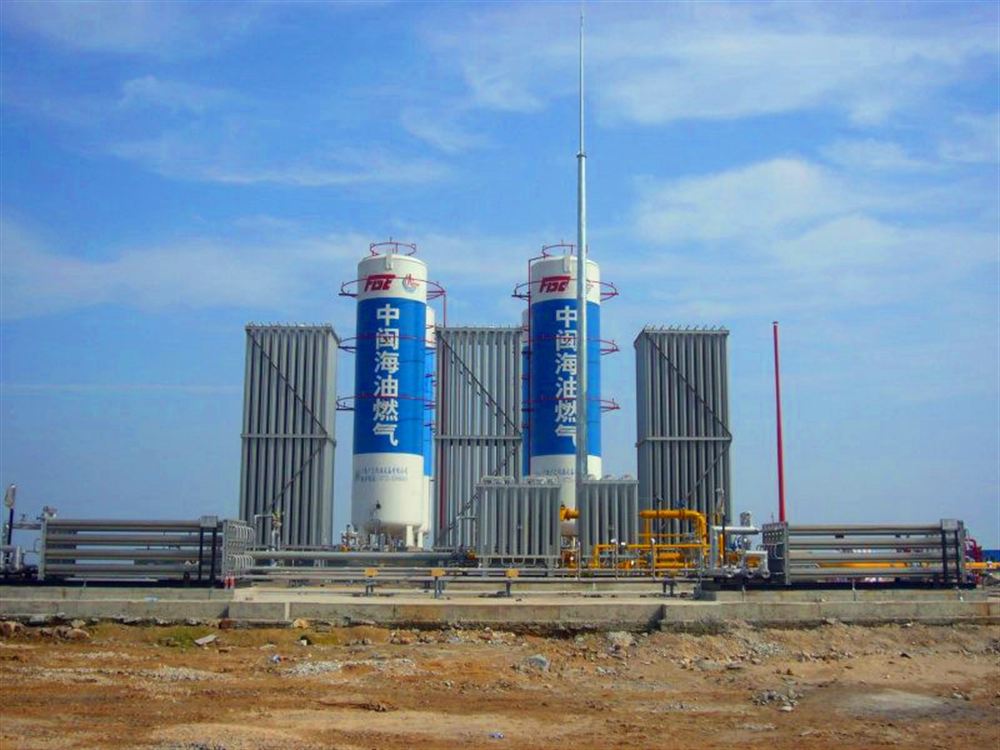
整站与单撬的区别在于“接口变多”:储罐液位与压力、卸车增压、气化器并联切换、调压计量、加臭、BOG 回收、放散与消防,任何一处没对上,整套站就跑不顺。泰燃按站交付时先出工艺流程图与平面布置,再定设备清单,最后按图做撬——顺序反过来,现场必然改管。A station has many more interfaces than a skid; P&ID and layout come first, equipment list second, fabrication last.
以已交付的空军某飞行学院项目为例:2 套 1000 Nm³/h LNG 气化站加 2 套 1000 Nm³/h CNG 减压站,2025 年 4 月签约、12 月完成验收,站址在黑龙江五常拉林镇,冬季极端低温是设计的第一约束条件。这类项目的气化器规格不能按铭牌选,必须按当地最冷月平均温度折算后再留余量。Reference: Air Force flight academy — 2×1000 Nm³/h LNG stations plus 2×1000 Nm³/h CNG stations, signed April 2025, accepted December 2025 in Heilongjiang; cold-climate sizing dominated design.
工作原理:一座站里的四条线Working principle: four lines inside one station
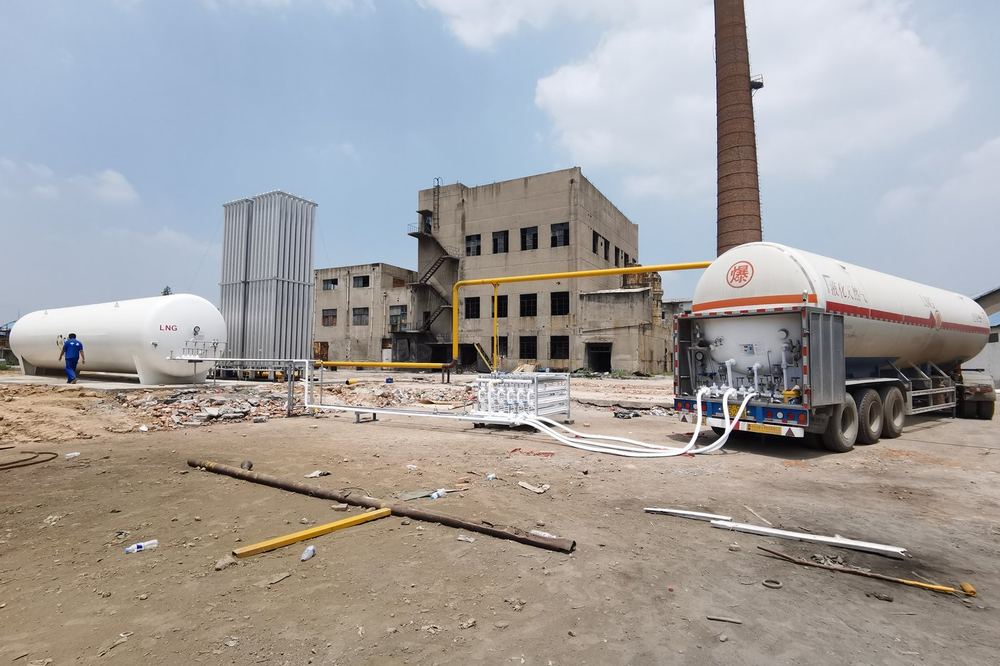
LNG 气化站不是“一台设备”,而是一套系统:储罐区、气化区、调压计量区、放散与安全系统,加上总图、基础、消防与电气。液体从储罐出来,经泵(或自增压)升压,进气化器换热成常温气体,再经调压、计量、加臭(民用管网需要)进入下游。An LNG station is not a single machine but a system: tank area, vaporisation area, regulating and metering area, relief and safety systems, plus layout, foundations, fire protection and electrics. Liquid leaves the tank, is pressurised by a pump or by self-pressurisation, vaporised, regulated, metered and — for town gas — odorised.
四条线各有各的逻辑:液相线要保冷、减少漏热与气蚀;气相线要控制温度,避免低温脆断;放散线要保证任何工况下都能安全排放(EAG 加热器、放散管高度);安全线包括可燃气体报警、紧急切断、消防联动。任何一条线设计不当,整站都过不了验收。Each line has its own logic: the liquid line is insulated against heat leak and cavitation; the gas line is temperature-controlled against embrittlement; the vent line must be able to discharge safely in any case (EAG heater, stack height); the safety line covers gas detection, emergency shut-off and fire interlock. One weak line fails the whole acceptance.
BOG(蒸发气)是站内绕不开的话题。储罐漏热、泵运转、管道吸热都会产生 BOG;小站直接放散,大站回收(回罐、再冷凝或做加热器燃料)。投运后才发现放散量大的项目,通常是当初没算 BOG。Boil-off gas cannot be avoided: heat leak, pump operation and pipe heat gain all generate it. Small stations vent it; larger ones recover it — back to the tank, reliquefied, or used as heater fuel. Projects that discover excessive venting after start-up usually skipped the BOG estimate.
结构组成What is on the skid
核心优势Why this design
- 先出图后制造:P&ID 与平面布置确认后才下料,减少现场改管。P&ID first, fabrication second.
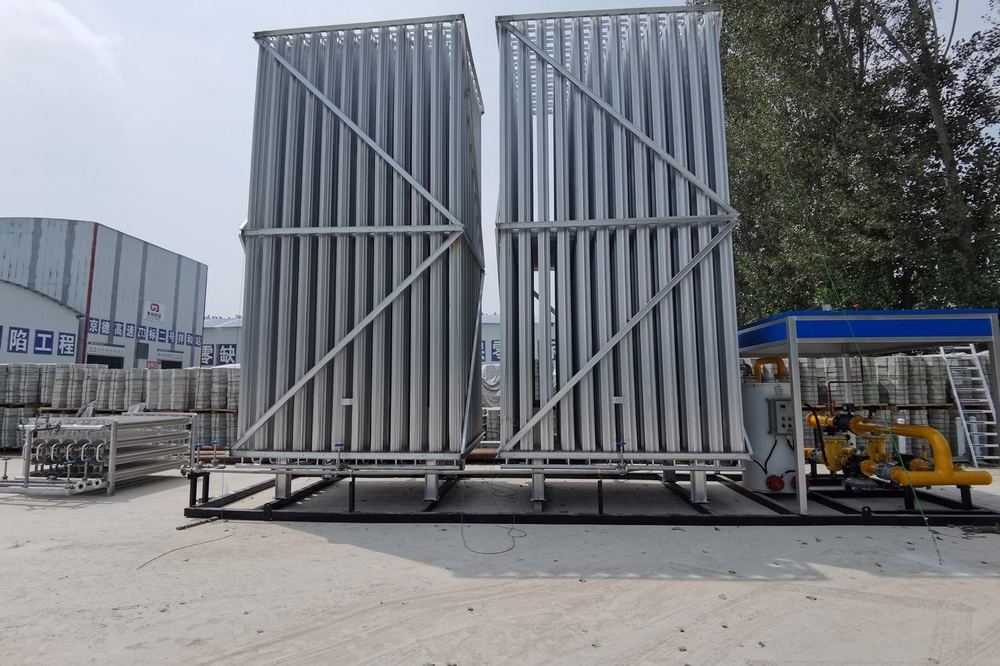
- 冬季工况折算:气化器按最冷月温度选型,不按铭牌。Vaporisers sized to coldest month.
- 整站一家交付:设备与 GC2 级管道安装同一主体,责任清晰。Equipment and GC2 piping from one supplier.
- 可分期扩容:预留并联接口,二期加列不动一期管路。Parallel interfaces for phased expansion.
产品实拍Product photos
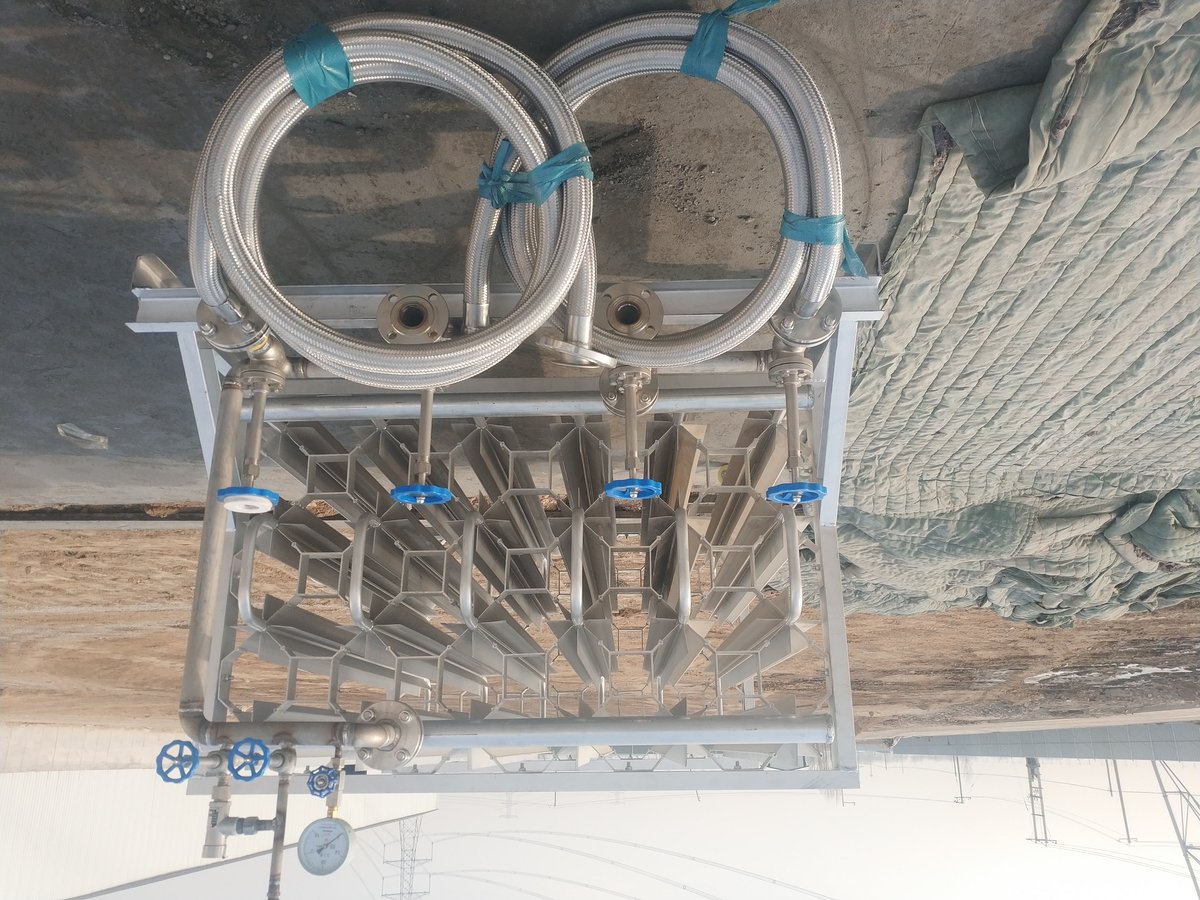
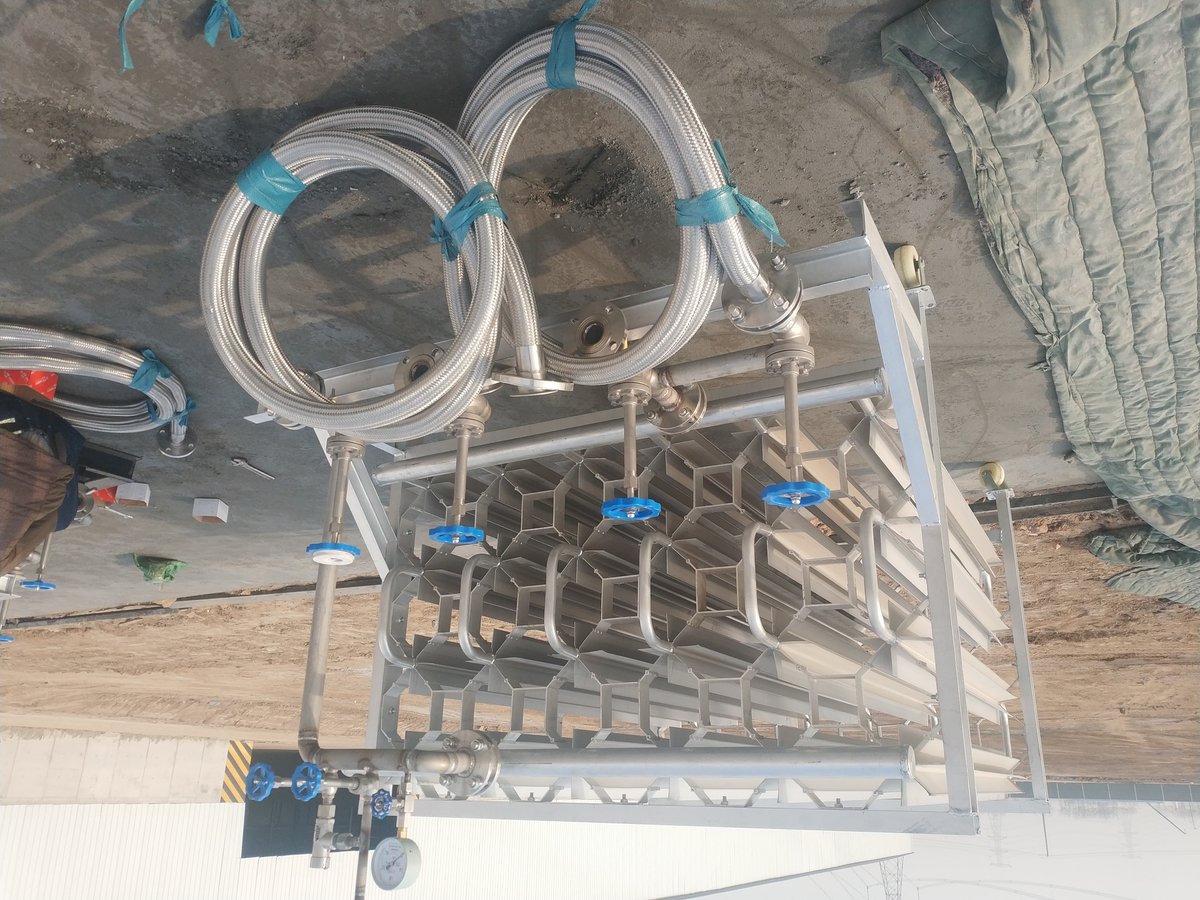
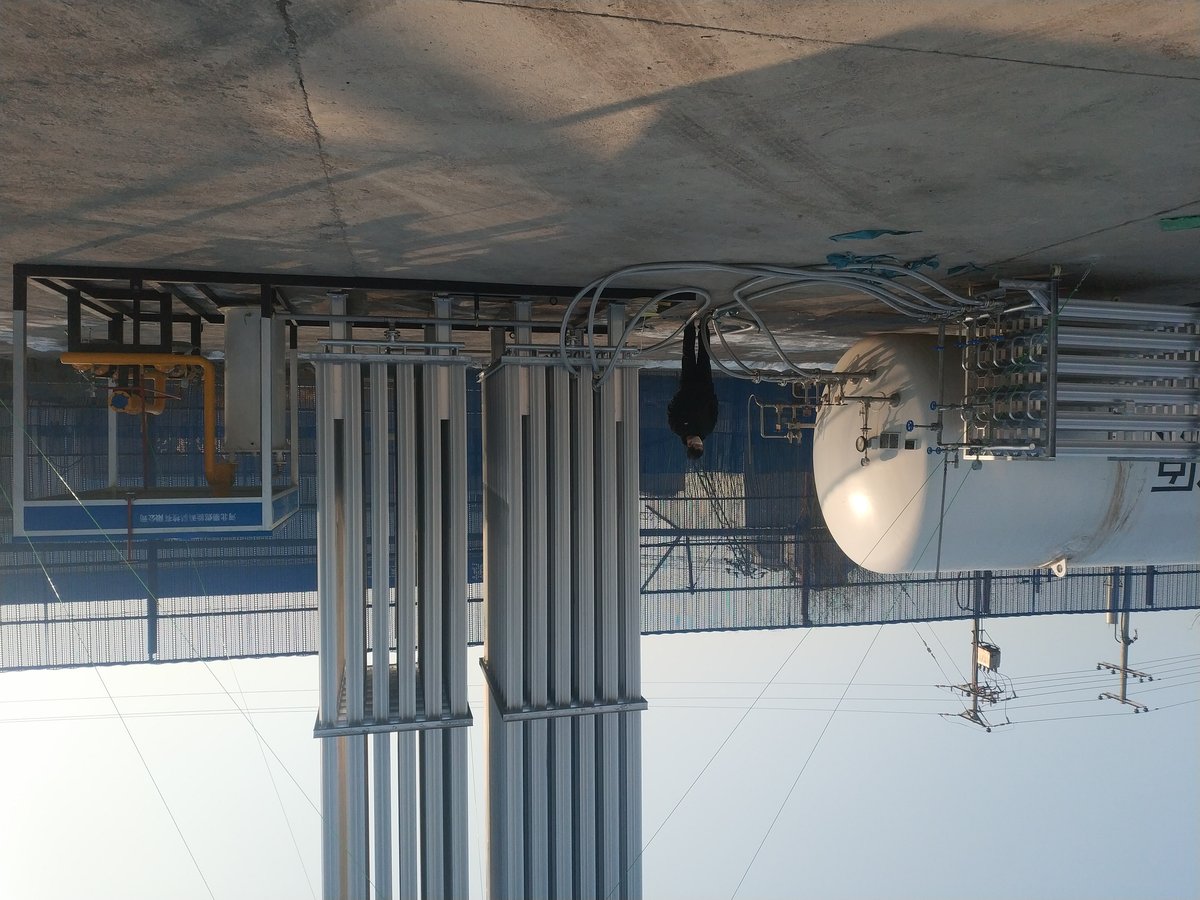
LNG 气化站 · 成套交付现场LNG vaporising station — delivered as a set 点击图片放大查看。 Click to enlarge.
技术参数Technical data
| 整站规模Station size | 500–5000 Nm³/h(单列/多列)500–5000 Nm³/h |
|---|---|
| 储罐容积Tank | 按日用气量与备用量确定Sized to daily demand and reserve |
| 进口压力Inlet | 0.6–0.8 MPa(储罐出口)0.6–0.8 MPa |
| 出口压力Outlet | 10–15 kPa / 0.2–0.4 MPa10–15 kPa / 0.2–0.4 MPa |
| 气化配置Vaporisation | 空温式并联 + 水浴式复热Ambient parallel + water-bath trim |
| 安装资质Installation | GC2 级工业管道安装许可GC2 piping licence |
| 控制Control | PLC 集中监控,支持远程上传PLC with remote upload |
表中为该系列典型配置。项目流量、介质与进出口压力不同时按工况单独设计,参数以合同技术文件为准。Typical configuration; units are engineered per duty and the contract data sheet governs.
选型与计算要点Selection points
适用工况Typical duties
适合什么工况,什么情况不适用Where it fits, and where it does not
这套设备适合Best for
- 储气、气化、调压、监控整站成套,一家交付Storage, vaporisation, regulation and monitoring from one supplier
- 液位、压力、温度可远传,无人值守站可行Remote level, pressure and temperature; unattended operation possible
- 储气量大,适合城镇与园区基荷供气Large storage suits town and park base load
- 可按补液周期定容,运行成本可控Sized to the refill cycle to control running cost
需要提前确认的边界Check before ordering
- 需办理站址、消防与安全相关审批Requires siting, fire and safety approvals
- 低温储罐需定期检验,投资与占地高于撬装Tank inspection is periodic; capex and footprint exceed a skid
- 卸车作业需专人操作与静电防护Unloading needs trained operators and static protection
标准配置Standard configuration
以上为常规配置,实际随机组按工况与用户管网条件确定,可按需增减。Standard scope shown; final scope is set by duty and network conditions, and can be adjusted.
主要零部件Main components
零部件的品牌与型号按项目技术要求与用户指定品牌确定,页内不限定具体厂家。Brand and model are fixed by project specification and the user's approved vendor list.
常见问题FAQ
气化站和一台气化撬有什么区别?How does a station differ from a skid?
撬是设备,站是工程。撬只有气化与调压功能;站还包括储罐、总图、基础、消防、电气与控制,需要按危险化学品设施的要求做设计与验收。A skid is equipment; a station is a project. The skid vaporises and regulates; the station adds tanks, layout, foundations, fire protection, electrics and control, and is designed and accepted as a hazardous installation.
BOG 一定要回收吗?Must BOG be recovered?
不一定。小站放散量小,规范允许直接放散;大站或连续运行时放散损失与安全风险都上升,建议回收。判断依据是算出来的 BOG 速率,不是感觉。Not always. Small stations vent small amounts, which the codes allow; larger or continuously operating stations benefit from recovery. The decision follows a calculated BOG rate, not a feeling.
冬季保供怎么保证?How is winter supply secured?
三条:气化能力按最冷天校核、储罐有足够周转量、关键设备一开一备。三条缺一条,寒潮来的时候就会暴露。Three things: coldest-day vaporisation duty, enough tank turnover, and duty/standby on critical equipment. Miss one and a cold snap will show it.
验收需要哪些资料?What is needed for acceptance?
设计文件与总图、设备合格证与监检报告、管道安装与试验记录、电气与仪表调试记录、消防与防雷检测、试运行记录。资料要在开工前就按清单准备,不是验收前突击。Design documents and layout, equipment certificates and inspection reports, piping installation and test records, electrical and instrument commissioning, fire and lightning protection tests, and trial-run records — prepared from the start, not scrambled at the end.
站内可以无人值守吗?Can the station run unmanned?
可以,但要满足远程监控、报警联动、紧急切断与巡检制度。无人值守不等于无人管理。Yes, with remote monitoring, alarm interlock, emergency shut-off and a patrol regime. Unmanned is not unmanaged.
同类设备Related equipment
把你的工况发过来,我们出选型表Send your duty, we return a selection sheet
需要提供:介质、最大/最小流量、进口压力、出口压力、现场热源(电/热水/蒸汽)、安装场地条件。We need medium, min/max flow, inlet and outlet pressure, available heat source and site conditions.